
Why Escape Rooms Are Good for Team Building (And Why Your Team Needs One)

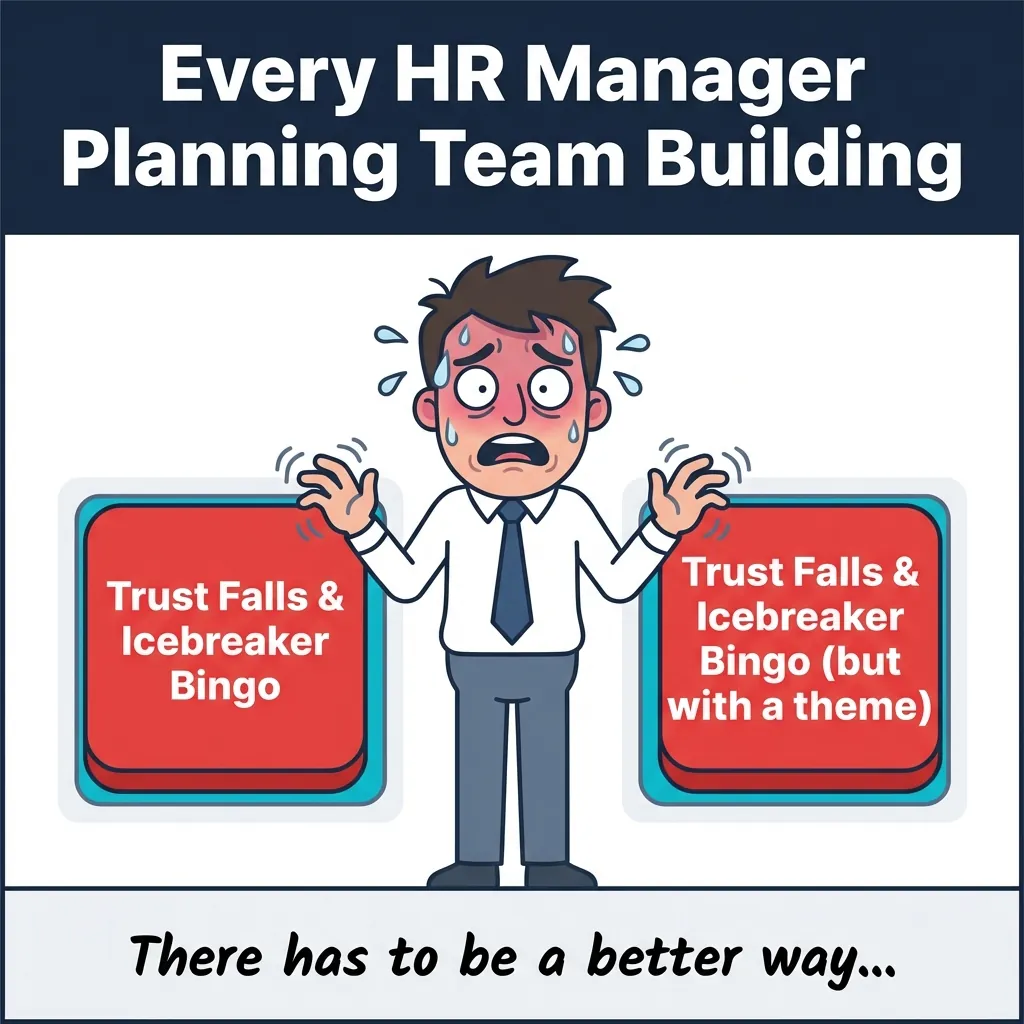
The trust falls. The icebreaker bingo cards. (We’ve all survived those.)
Most corporate team building earns eye-rolls, not results. Employees show up, get through the afternoon, and return to work unchanged. Escape room team building activities are a different beast altogether – real shared pressure that shows who your people really are.
And that’s what Boise teams deserve – team building that’s effective, engaging, and memorable. Not another “office event” everyone will forget next week.
Why Traditional Team Building Keeps Failing Your Team
The Real Reason Forced Fun Backfires
Nobody bonds over mandatory fun.
Passive activities like trivia nights, catered lunches, and ropes courses skip any real decisions under pressure. Your team shows up without actually collaborating. Research (published on the NIH website, no less) states that engagement collapses when the event has no or artificial stakes. Why? Without genuine challenge, there’s no shared memory worth holding onto.
The experience ends. Nothing carries back to work.
What Great Teams Actually Need to Grow
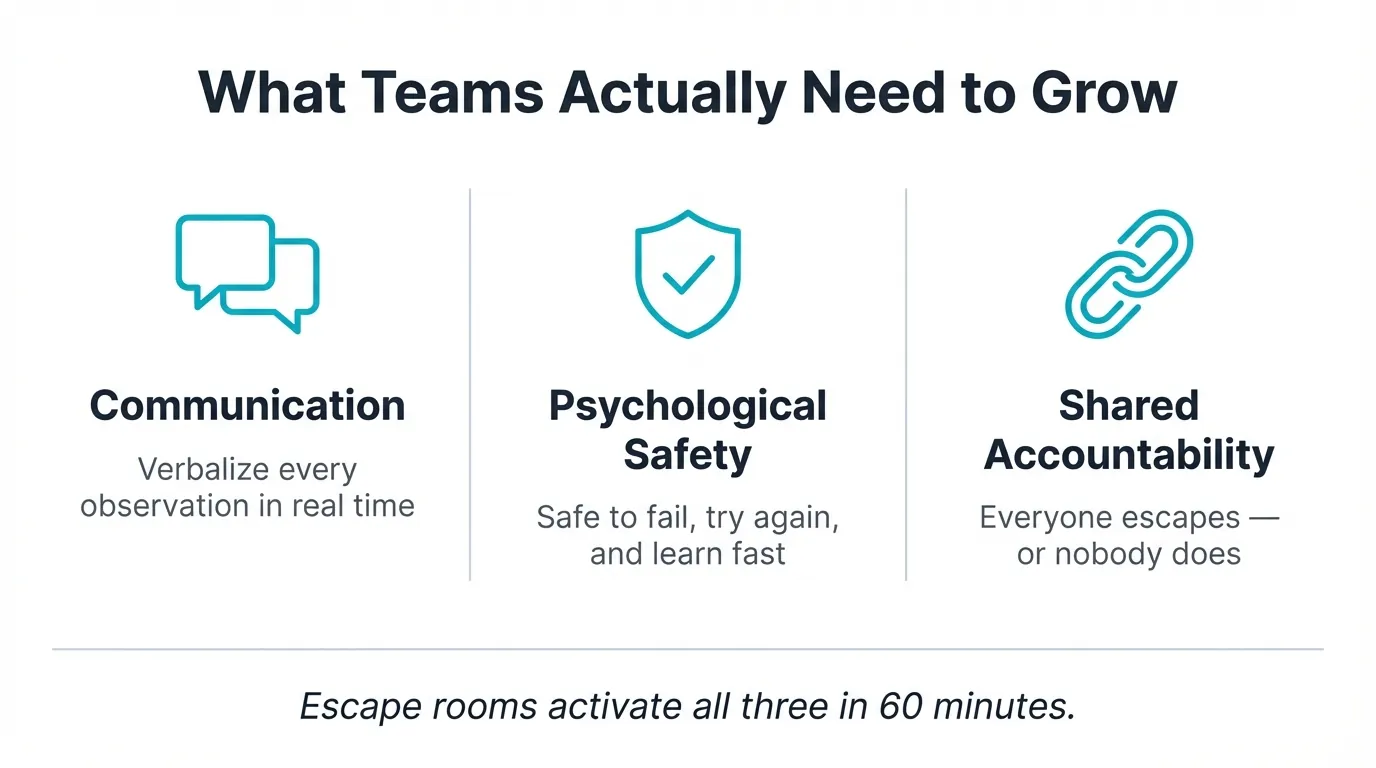
Harvard Business Review research on building great teams points to communication, psychological safety, and shared accountability as core growth drivers. Generic Boise team building activities rarely touch any of those. Teams grow when they face real problems together, not when they occupy the same room. Idaho business trends show employee retention tied directly to meaningful connection at work.
Corporate group activities without real stakes simply don’t build that connection.
The Psychology Behind Why Escape Rooms Team-Build So Well
What Plato Knew About Learning That Most Managers Forget
“You can find more about a person in an hour of play than in a year of conversation.”
That single insight shifts how you think about team development.
Low-stakes play creates conditions for honest self-expression. People stop performing their job title. They start actually thinking alongside teammates. An escape room for corporate team building does exactly that – one hour reveals communication patterns, leadership instincts, and problem-solving styles.
According to Harvard Business Review research on great teams, teams with strong communication habits consistently outperform those without. Workplace collaboration improves fastest when learning feels real, not instructional. That’s the psychological mechanism escape rooms activate.
The environment does the work. You just show up.
How Low-Stakes Environments Accelerate Real Skill Transfer
Safe failure is a feature, not a consolation prize. Teams can try a wrong approach, learn immediately, and adjust without real consequences. This is why escape rooms are good for team building in ways that workshops simply aren’t. Problem-solving under pressure in a low-stakes room transfers directly to high-stakes work situations.
The Specific Workplace Skills Your Team Builds in One Hour
Communication Under Pressure Becomes a Team Habit
An escape room compresses a full team dynamic into sixty minutes. Every communication breakdown costs time, and time is the one resource nobody gets back.
Teams need to verbalize every observation the moment they notice it. Sitting on a clue wastes everyone’s effort. The one-hour clock generates authentic urgency, and coordinating under that kind of pressure sharpens communication habits far faster than any workshop format could. Boise escape room experiences drop teams straight into that pressure from the opening minute.
That’s precisely why escape rooms for team building carry the reputation they do.
Hidden Strengths and Natural Leaders Emerge Organically
We at Labyrinth Escape Games design this environment with corporate groups specifically in mind. Every Boise team building event we host is private, no strangers mixed in to disrupt your team’s dynamic. The cinematic, story-driven rooms generate genuine immersion that generic venues simply can’t replicate.
Inside those rooms, something interesting happens to team hierarchy. The quiet analyst becomes the puzzle-solver. The new hire spots the pattern everyone else walked past. (Managers are often the most caught off guard by this.)
Unexpected strengths rise to the surface because the environment demands nothing less.
Shared Wins and Losses Build Collective Accountability
Either everyone escapes or nobody does. That structure mirrors real project accountability more closely than any team building exercise I’ve seen. Shared failure bonds a team just as effectively as shared success.
Why the Experience Sticks Long After You Leave the Room
The Memory Effect That Traditional Team Building Can’t Replicate
Escape room memories don’t fade the way conference room exercises do.
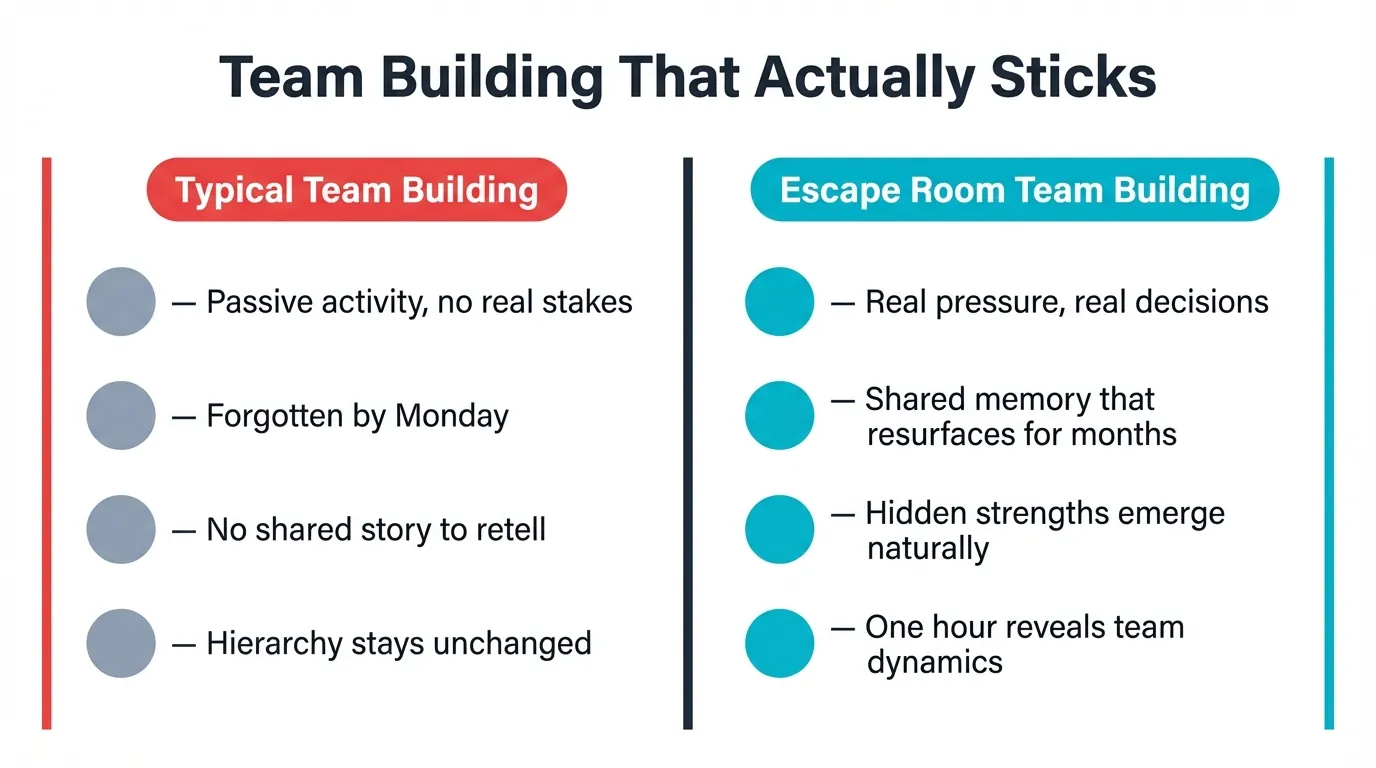
Emotionally vivid shared experiences form stronger team bonds. Basic memory science, that. When your team cracks a puzzle together at minute fifty-eight, that moment becomes a story they retell for months.
Positive shared memories resurface during high-pressure work periods as a kind of team anchor. Immersive experiences create identity and belonging in ways that passive activities simply never reach. That’s the lasting return on one hour of corporate team building.
Those stories strengthen cohesion when real work gets hard.
Escape Rooms Reveal Dynamics – Follow-Up Makes Them Count
Skepticism is fair. It isn’t a magic fix for broken team culture, but escape room team building works wonders to bring out group dysfunction patterns that would otherwise stay invisible. A debrief conversation after the game amplifies skill transfer significantly.
The best outcomes come when the experience connects to an ongoing team development culture. One great afternoon is a starting point, not a finish line.
How to Make Your Boise Team Building Actually Happen
What to Look for in a Corporate Escape Room Experience
Not every escape room suits corporate groups. Private bookings are non-negotiable – strangers in the room disrupt team observation entirely. Group size flexibility matters too, since most teams don’t fit a single standard configuration.
Immersive design counts.
Story-driven rooms with real set design boost engagement and strengthen memory formation. A generic puzzle room won’t produce the emotional arc that makes team building stick.
Why Boise Teams Have a Standout Local Option
Team building at Labyrinth checks every one of those boxes for Boise and Nampa corporate groups. Our rooms feature cinematic design, 4D effects, and hands-on props that generate genuine immersion. The Nampa location includes the Explorers Club bar – Idaho’s only escape room bar – giving teams a natural post-game debrief space. Private bookings come at no extra cost, which removes a common friction point for corporate planners.
That combination feels premium, not generic.
Conclusion
Escape rooms build communication, trust, and problem-solving in sixty minutes through genuine shared challenge, not manufactured fun. The memories stick, and they pay off when real work pressure hits. Skip the trust falls. Book your team building escape room in Boise and see the difference yourself.
